
Thailand Golfing Weather
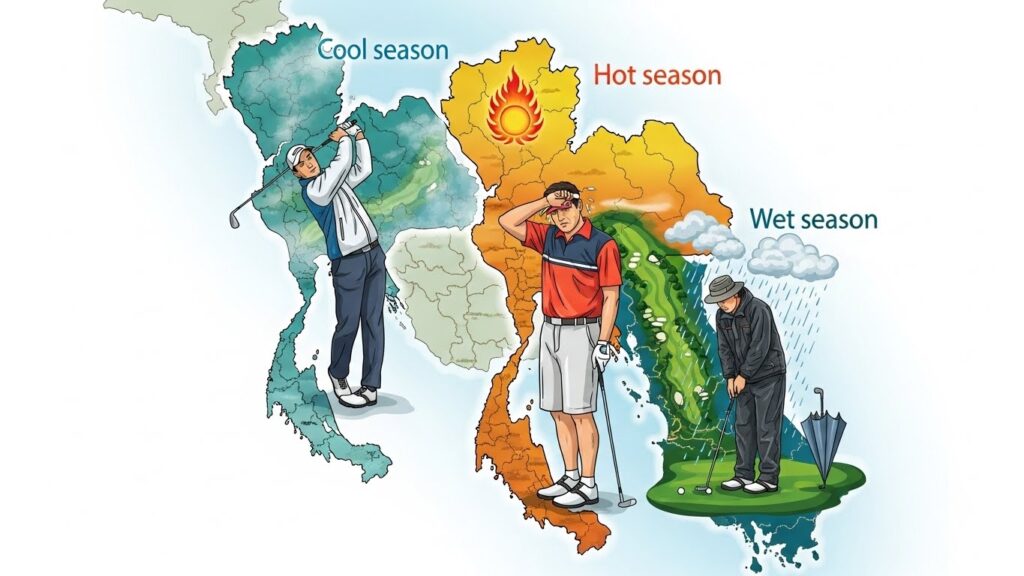
Below are a list of AccuWeather approximate Thailand regional location links to provide your golfing weather conditions.
For full geographic live and forecast weather conditions for your preferred Thailand regional locations, you can use the link above ” Accuweather Weather Main Page“
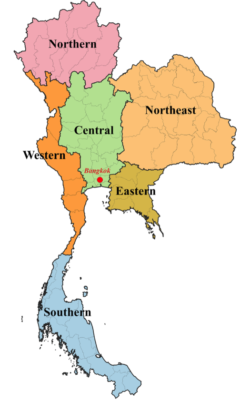
1 – Northern Thailand: Chiang Mai & Chiang Rai
2 –Northeastern Thailand (Isan) & Khao Yai
3 – Western Thailand: Hua Hin & Kanchanaburi
4 – Central Thailand: Bangkok
5 – Eastern Thailand: Pattaya
6 – Southern Thailand: Phuket, Krabi & Koh Samui
About Thailand’s Seasonal Weather Golfing Condtions
- Thailand Golfing Weather Analysis
- The Three Main Seasons
- Major Factors Influencing Weather
- Golfing Weather Guide
- Summary Table for Golf Planning 2025-2026
- 2026 Quick-Drain Golf Course List (Rainy Season Reliability)
- Bangkok Region (Central Thailand)
- Pattaya Region (Eastern Thailand)
- Hua Hin Region (Western Thailand)
- Weather & Playability Disclaimer
Thailand Golfing Weather Analysis
Thailand’s weather is primarily driven by seasonal monsoons, regional geography (oceans and mountains), and global climate phenomena like El Niño and La Niña.
In 2025, weather patterns have been particularly volatile due to a transition from neutral to La Niña conditions, leading to record-level rainfall and intense flooding in several regions.
Selecting the optimum weather for a golf holiday in Thailand is about more than just avoiding rain; it is the fundamental factor that determines the quality, comfort, and rhythm of your game.
In a tropical climate, weather conditions directly impact several critical aspects of the golfing experience.
- The Comfort Factor: Thailand’s humidity and heat index can fluctuate wildly. Choosing the “Cool” season ensures you can walk 18 holes comfortably, whereas the “Hot” season necessitates early tee times and heavy cart reliance to avoid heat exhaustion.
- Course Playing Conditions: Weather dictates the “playability” of a course. In dry seasons, you get maximum roll on the fairways and fast, firm greens. During the “Wet” (Green) season, fairways become soft (“target golf”), and greens may be slower and more receptive.
- Operational Restrictions: Excessive rainfall often leads to “Cart on Path” only rules to protect the turf, which can significantly slow down the pace of play. In extreme cases, unseasonal storms can lead to temporary course closures or lightning delays.
- Equipment Care: High humidity and sudden tropical downpours can take a toll on leather grips, gloves, and electronic rangefinders. Playing in the right window ensures your gear remains in top condition.
- Logistics and Delays: Visibility during the “burning season” in the North or monsoon squalls in the South can interrupt your itinerary, leading to frustrated travel plans and missed rounds.
We have provided this extensive and comprehensive guide on Thailand’s seasonal weather patterns to empower you to make an informed choice.
By understanding the nuances of the Cool, Hot, and Rainy / Green seasons across all six regions, you can align your trip with the optimum weather for your desired destination—ensuring your time on the links is defined by birdies, not rain delays.
The Three Main Seasons
- Cool Season (Nov – Feb): Driven by the Northeast Monsoon, which brings dry, cool air from China into Upper Thailand. While northern regions experience chilly mornings (as low as 15°C), the same wind causes heavy rain on the Gulf of Thailand coast.
- Temperature ranges: 20°C – 30°C (68°F – 86°F)
- Humidity ranges: 50% – 70%
- Hot Season (Mar – May): A transitional period characterized by high pressure and intense solar radiation. In 2025, summer began on February 28, with average temperatures reaching 35–36°C.
- Temperature ranges: 35°C – 40°C+ (95°F – 104°F+)
- Humidity ranges: 70% – 85%
- Rainy /Green Season (Jun – Oct): Triggered by the Southwest Monsoon, which pulls moisture from the Indian Ocean. Most of Thailand sees daily heavy showers, though the Andaman Coast is hit hardest during this time.
- Temperature ranges: 25°C – 32°C (77°F – 90°F)
- Humidity ranges: 70% – 90%
Major Factors Influencing Weather
- Monsoon Systems: The Southwest Monsoon (May–Oct) brings rain, while the Northeast Monsoon (Nov–Feb) brings cool air. These winds shift based on pressure differences between the Asian landmass and the surrounding oceans.
- Oceans and the Gulf:
- Andaman Sea (West): Experiences peak rain from May to October.
- Gulf of Thailand (East): Has a unique cycle where peak rain occurs much later, from October to December, as the Northeast Monsoon passes over the water and picks up moisture.
- ENSO Cycle (El Niño & La Niña):
- El Niño: Typically causes longer hot seasons, higher temperatures, and reduced rainfall (as seen in 2023).
- La Niña: Prevailing in 2025, it has intensified rainfall and cooling winds, leading to widespread flooding (nearly 5 million rai submerged).
- Climate Variations: In 2025, officials noted “climate volatility,” where traditional seasons are increasingly punctuated by extreme cold snaps followed by unseasonal heat or storms.
Golfing Weather Guide
Here is a 2025-2026 regional golfing weather guide for the Andaman Sea and the Gulf of Thailand, designed to help you plan your trip around the best conditions.
Thailand’s weather seasons for its two coasts are staggered, meaning that a beach area with calm seas and clear skies is possible almost all year round, provided you choose the right region.
Comprehensive Thailand Golfing Weather Guide (12-Month Regional Breakdown)
1. Northern Thailand: Chiang Mai & Chiang Rai
- Cool Season (Nov – Feb): The Gold Standard. Mornings are crisp (15°C–20°C). Ideal for those who prefer walking. Courses are in peak condition.
- Hot Season (Mar – May): Can exceed 38°C. Dry heat. Note: March/April can see reduced visibility due to regional agricultural haze.
- Rainy Season (Jun – Oct): Generally afternoon showers. The landscape is stunningly green, and the air is the freshest of the year.
2. Northeastern Thailand (Isaan) & Khao Yai
- Cool Season (Nov – Feb): Very stable, dry, and breezy. The elevated courses in Khao Yai offer a refreshing break from the heat of the plains.
- Hot Season (Mar – May): Very firm fairways and high UV levels. The sun is intense; high-SPF sunblock and umbrellas are mandatory.
- Rainy Season (Jun – Oct): Rapidly moving storms. Due to the plateau geography, courses here often dry faster than those in Central Thailand.
3. Western Thailand: Hua Hin & Kanchanaburi
- Cool Season (Nov – Feb): Peak Playability. Constant sea breezes in Hua Hin act as a natural air conditioner and a challenging hazard for your ball flight.
- Hot Season (Mar – May): Extremely dry and hot. Fairway “roll-out” is at its maximum.
- Rainy Season (Jun – Oct): Hua Hin is statistically the driest golf destination in Thailand during this window, with only October seeing significant rainfall.
4. Central Thailand: Bangkok
- Cool Season (Nov – Feb): The most popular time. Perfect temperatures (25°C–30°C) and low humidity.
- Hot Season (Mar – May): High humidity makes it feel much hotter than the thermometer suggests. Night golf is a fantastic alternative during these months.
- Rainy Season (Jun – Oct): Afternoon downpours. While drainage in Bangkok is elite, “Cart on Path” is common during these months to protect the fairways.
5. Eastern Thailand: Pattaya
- Cool Season (Nov – Feb): Excellent coastal conditions. Firm, fast, and windy.
- Hot Season (Mar – May): Humid but tempered by the Gulf of Thailand’s breezes.
- Rainy Season (Jun – Oct): Known as a “rain shadow” region; Pattaya often stays dry while Bangkok is raining, making it a highly reliable “Green Season” choice.
6. Southern Thailand: Phuket, Krabi & Koh Samui
Crucial: The two coasts have opposing wet seasons.
|
Season |
Phuket/Krabi (Andaman Coast) |
Koh Samui (Gulf Coast) |
|
Cool (Nov – Feb) |
Optimal: Sunny and dry |
Wet: Peak rain in Nov/Dec |
|
Hot (Mar – May) |
Hot/Humid: Still very playable |
Optimal: Best time for Koh Samui golf. |
|
Rainy (Jun – Oct) |
Monsoon: Frequent rain/wind. |
Good: Drier than the West Coast. |
Summary Table for Golf Planning 2025-2026
|
Month |
Region to Target |
Season Phase |
2025-2026 Specific Forecast |
|
Nov – Feb |
All Regions (Except Koh Samui) |
Cool: Perfect weather, firm greens |
Cooler & Wetter: La Niña is expected to bring lower temperatures and occasional unseasonal rain early in the period |
|
Mar – Apr |
Hua Hin / Pattaya / Koh Samui |
Hot: Coastal areas for breeze |
Dry Start: Forecasters expect a typical hot season transition in late Feb/early March |
|
May – Jun |
Hua Hin / Pattaya / Bangkok |
Early Rainy: Rates drop, rain is minimal |
Increased Rain: 2025 data shows rainfall 10-20% higher than average due to lingering La Niña effects |
|
Jul – Aug |
Koh Samui / Pattaya |
Mid Rainy: “Dry” pockets during monsoon. |
High Flooding Risk: September-October are projected to have above-average rainfall across Central and North Thailand |
|
Sep – Oct |
Pattaya / Hua Hin |
Peak Rainy: Avoid North/Phuket if avoiding rain. |
Monsoon Intensity: Heavy rain and flash flood risks are peak for most regions except the Gulf side of the South |
2026 Quick-Drain Golf Course List (Rainy Season Reliability)
Here are the top courses in Bangkok, Pattaya, and Hua Hin known for their exceptional drainage and all-weather playing conditions.
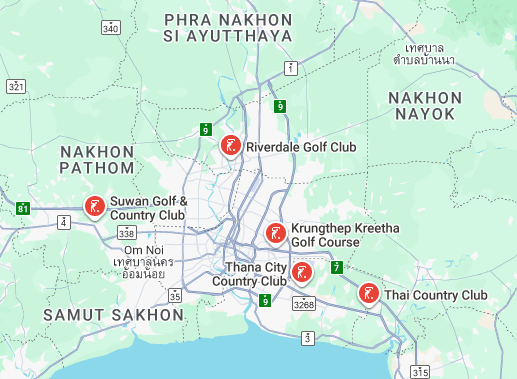
Bangkok Region (Central Thailand)
These courses are designed with superior drainage systems to handle the heavy, short downpours typical of the Bangkok rainy season (May–October), allowing play to resume quickly.
Thai Country Club
Known for impeccable conditioning and a US PGA-standard design, it features Paspalum grass fairways and is built to handle heavy rain efficiently, having hosted major professional tournaments.
Riverdale Golf Club
This course specifically utilizes Salam Paspalum on tees and fairways, and elevated greens, ensuring year-round playability. The design uses large lakes and hills for dramatic effect and practical water retention.
Suwan Golf & Country Club
Boasts Seashore Paspalum grass on fairways, tees, and rough. It’s known for its excellent course quality and hilly layout, which helps with water run-off.
Thana City Country Club
Known for having one of the best drainage systems in the region, this Greg Norman design is a reliable choice for golfers during the wet months.
Krungthep Kreetha Golf Course
Reviewers note that its greens remain playable even after heavy downpours thanks to an effective drainage system.
Pattaya Region (Eastern Thailand)
Pattaya is naturally drier than Bangkok, but these courses offer added protection against wet conditions.
Chee Chan Golf Resort
This highly-rated course is built on an undulating landscape and drains exceptionally well. Its elevation and design help prevent waterlogging and keep conditions prime.
Laem Chabang International Country Club
The Jack Nicklaus-designed 27-hole complex features significant elevation changes and Paspalum grass on several holes, aiding drainage.
Siam Country Club Old Course
These championship courses maintain excellent conditions year-round, utilizing modern turf management and excellent design to ensure they dry quickly after rain.

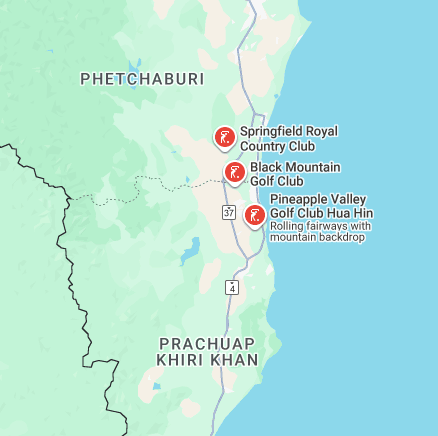
Hua Hin Region (Western Thailand)
Hua Hin’s naturally dry climate combined with quality course design makes for highly dependable rainy season golf.
Hua Hin’s naturally dry climate combined with quality course design makes for highly dependable rainy season golf.
Black Mountain Golf Club
Often cited as the benchmark for quality in Hua Hin, its natural creeks and elevated design ensure fast drainage. It is very reliable in wet weather.
Pineapple Valley Golf Club (formerly Banyan)
This course is known for elevated tees and sloping fairways which efficiently manage heavy water flow, remaining in superb condition even after rain.
Springfield Royal Country Club
A Jack Nicklaus design with wide landing areas and good overall maintenance, it provides a very playable surface throughout the year.
Weather & Playability Disclaimer
General Information and Historical Context
The weather summaries and seasonal overviews provided are for general informational purposes only. All climate data and regional descriptions are presented on a “best-known” basis, derived from historical records, long-term atmospheric trends, and estimated seasonal averages.
While these patterns offer a reliable framework for travel planning, they serve as a guide to what is likely to occur rather than a guarantee of actual future conditions.
Unpredictability and Extreme Conditions
Weather is inherently fluid and subject to sudden, extreme shifts. Thailand’s tropical climate can produce rapid changes, including localized monsoon activity and unseasonable weather patterns that may deviate significantly from historical norms.
We cannot be held liable for any inaccuracies in forecasting or for unexpected weather events—including extreme rainfall, high heat indices, or atmospheric disturbances—that may impact your itinerary.
Course Playability and Management
Golf course conditions and playability are at the mercy of prevailing weather. Following heavy or sustained rainfall, course conditions are subject to the discretion of individual club management and greenkeepers.
Preferred “playable” status and reviews regarding drainage or recovery times are based on previous performance and general feedback; however, current playability can change within minutes due to surface saturation, lightning risk, or maintenance requirements.
Assumption of Risk
By utilizing this information, users acknowledge that outdoor activities involve inherent weather-related risks. It is the player’s responsibility to monitor real-time local forecasts and adhere to individual golf course safety policies, including the suspension of play for safety or turf protection
Thank you

Thailand
TCF Golf Thailand Management